
Short answer: they're built differently, used differently, and need different maintenance
Here's the one-sentence version you can send to settle it: a commercial or warehouse overhead door isn't a residential door scaled up, it's a different piece of equipment with heavier components, a higher duty cycle, and maintenance needs that don't match the "once a year" schedule most homeowners use on their garage. If someone in the house is arguing that "a door is a door," this is why they're wrong.
What's actually different about construction
Residential garage doors are built for a couple handfuls of cycles a day, usually two to four times when people leave for work and come home. Commercial doors, especially on a warehouse, shop, or loading area, can cycle dozens of times in a single day. That changes almost everything about how they're built:
- Gauge and materials: Commercial doors typically use heavier-gauge steel panels and reinforced tracks because they're taking more abuse, more often, sometimes from forklifts or pallets brushing close to the opening.
- Torsion springs rated for cycles: Residential springs are usually rated for somewhere around 10,000 cycles. Commercial springs are often rated much higher, because at high-use volume a residential-grade spring would wear out in a fraction of the time.
- Operators (openers): A residential chain-drive or belt-drive opener isn't built to run all day. Commercial doors often use jackshaft operators mounted beside the door, or heavier-duty trolley operators with continuous-duty motors designed for frequent starts and stops.
- Safety hardware: Commercial installations commonly include extra entrapment protection, like photo-eye sensors and edge sensors, because the risk profile is different when a door is opening and closing all day with people and equipment moving through.
- Track and drum systems: High-cycle doors often use heavier track brackets and larger drums to handle the repeated load without stretching cables or loosening hardware as quickly.
None of this is about one type being "better" — it's about matching the equipment to how hard it gets worked.
Why usage pattern changes the maintenance math
A homeowner's garage door gets a once-over every year or two and that's usually fine, because the hardware isn't under much stress. A commercial door doing 30, 50, or more cycles a day is putting that much more wear on rollers, hinges, cables, and springs every single week. Skipping maintenance on a high-cycle door doesn't just mean a squeaky noise — it means hardware failing faster than anyone expects, because nobody adjusted the schedule to match the workload.
What that means in practice
- Lubrication needs to happen more often on high-cycle doors, not just because of cycle count but because of local conditions (more on that below).
- Spring and cable inspections should happen more frequently, since a spring rated for higher cycles is still finite — heavy daily use adds up fast.
- Track alignment checks matter more, since repeated opening and closing shakes hardware loose faster than occasional residential use.
How Tucson's climate hits commercial doors harder
The dry heat here cooks lubricant and grease out of garage door hardware faster than in more humid climates, and that effect is magnified on a door that's cycling all day in a hot shop or warehouse. Grease that might last a season on a residential door can dry out and gum up much faster on hardware working overtime in the heat. That means rollers and hinges on a commercial door often need re-lubrication more often than the "twice a year" rule of thumb that works fine for a house.
UV exposure is another factor — steel panels and seals take a beating from Arizona sun, and on a door with a big surface area like a warehouse bay, that fading and material breakdown shows up faster simply because there's more surface exposed.
Then there's monsoon season. Sudden dust storms followed by heavy rain push grit into tracks and onto hardware, and a door cycling dozens of times a day pulls that dust and grit through the rollers and tracks far more aggressively than a door that only opens a few times. After monsoon activity, commercial doors especially benefit from a track wipe-down and a check for grit buildup in the rollers, since repeated cycling grinds that dust into moving parts.
Cool desert nights causing metal to contract can also throw off alignment on tracks and hardware, and because commercial doors are opening and closing constantly, a small alignment issue gets stressed and worsened much faster than it would on a door that's barely used.
When to call Tucson Garage Door Co
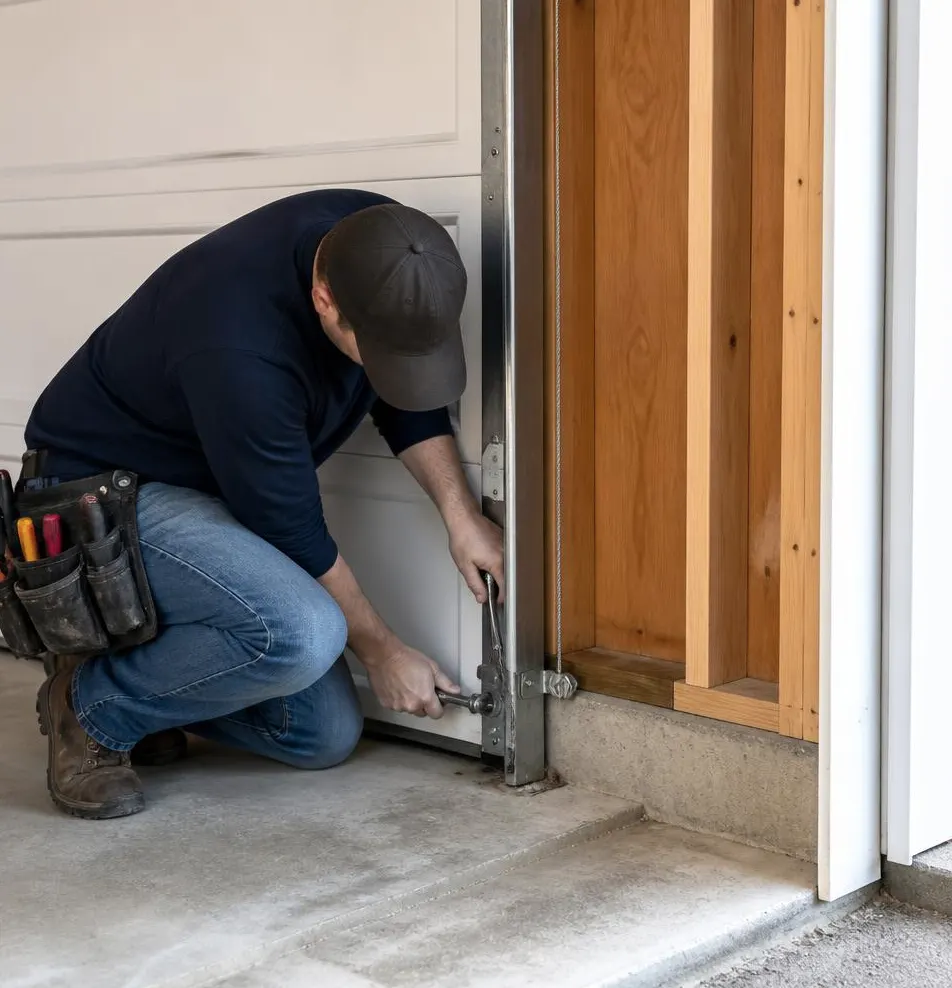
If you're running a shop, warehouse, or any commercial space and the door is cycling multiple times a day, it's worth having it on a maintenance schedule built for that workload rather than treating it like a house door. Tucson Garage Door Co's Commercial Garage Door Service is built around exactly this — heavier-duty hardware, higher cycle counts, and the added wear from local dust and heat. If it's been a while since anyone's looked at your springs, cables, or track alignment, a Garage Door Maintenance visit is the straightforward way to catch dried-out lubricant, loosening hardware, or early spring wear before it turns into a door that won't open during business hours.
Whether you're trying to settle a dinner-table argument or you've actually got a commercial door acting up, give Tucson Garage Door Co a call. We serve Tucson, Oro Valley, Marana, Catalina Foothills, Casas Adobes, Sahuarita, Green Valley, and Vail, and we'll tell you straight whether it's a quick fix or time for a real maintenance plan.